
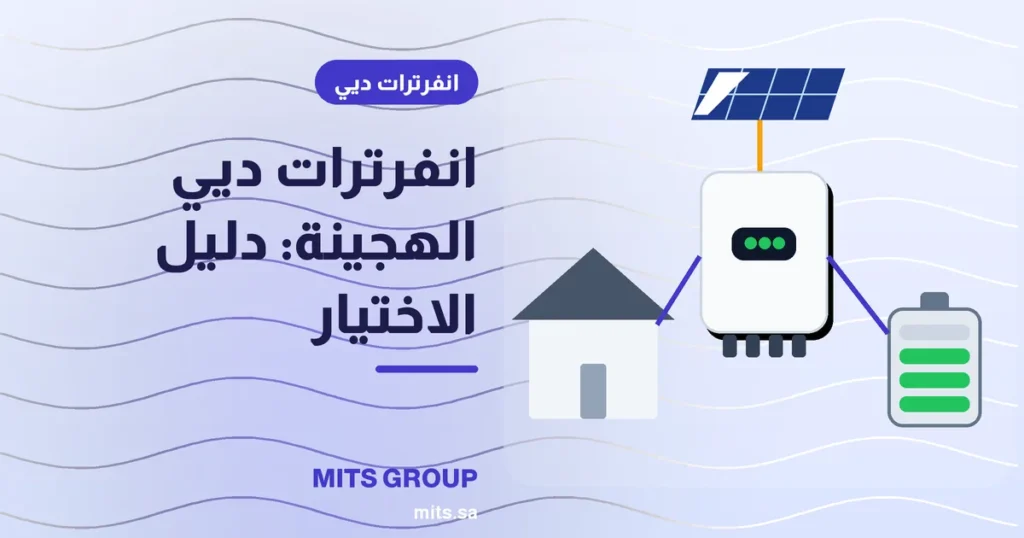
DIY hybrid inverters fall into two main families: low-voltage (LP) models, which typically work with 48-volt batteries, and high-voltage (HP) models, which work with batteries stacked at hundreds of volts. Each family includes single-phase (ending in 1) and three-phase (ending in 3) models. Selection begins with the power supply phase, then the power rating, and finally the battery type that best suits the project size.
- The SG in the model name indicates hybrid inverters, and G alone indicates grid-connected inverters without a battery.
- LP = Low voltage battery (often 48 volts, some small models 24 volts), and HP = High voltage battery.
- The last number after LP or HP determines the phase: 1 single, 3 triple.
- Low voltage is common in homes and rest areas, while high voltage is more suitable for large commercial capacities.
How do you read the name of a DIY hybrid inverter?
Take, for example, the name SUN-10K-SG05LP1-EU, which can be broken down as follows:
| Part | Meaning |
|---|---|
| SUN | DIY Solar Inverter Family Starter |
| 10K | Nominal power 10 kW |
| SG | Hybrid inverter that works with solar panels, battery, and grid. |
| 05 | Generation or series number |
| LP | Low battery voltage |
| 1 | Single-phase (3 means three-phase) |
| EU and beyond | Version code, market code, or sub-version code, such as SM2 or EM6 |
In comparison, a model like the SUN-10K-G05 is a grid-tied inverter without a battery, and the SUN-80K-SG02HP3 is a three-phase hybrid inverter that uses a high-voltage battery. The SUN-3K-SG04LP1-24, however, uses a 24-volt battery instead of a 48-volt battery, with the 24 at the end indicating a 24-volt battery.
This logic helps you read price quotes quickly, but exact specifications such as the number of MPPT inputs and maximum charging current are always taken from the model's data sheet itself.
Single-phase or three-phase in DIY inverters?
Basic rule: The hybrid inverter must be compatible with the power supply phase in the building, and with the load distribution method you want to operate during the outage.
- Single-phase (LP1): Suitable for single-meter homes and rest houses, or for feeding a single primary load panel. Available capacities are residential, such as DIY Hybrid 6kW 48V وDIY Hybrid 10kW.
- Three-phase (LP3 or HP3): Suitable for buildings with three-phase meters, and for three-phase loads such as some pumps, central air conditioners, and industrial equipment, such as DIY Hybrid 12kW Three Phase.
In a three-phase building, inquire about the model's ability to handle unbalanced loads between phases, as homes rarely have loads evenly distributed. For a detailed comparison between two-phase systems in general, see the article Single-phase or three-phase inverter?.
Low voltage (48 volts) or high voltage battery?
This decision affects the type of batteries and cables, the cost, and the method of future expansion.
| Standard | Low voltage LP | High voltage HP |
|---|---|---|
| battery voltage | Typically 48 volts nominal | Hundreds of volts depending on the number of stacked units |
| Current in battery cables | High elevation, requires thicker cables and appropriate protection. | Much less for the same capacity |
| Typical range of capabilities | small residential and commercial | Commercial and industrial |
| Compatible batteries | Wide selection of certified 48V batteries | Specific high-voltage batteries with a compatible management system |
| expansion | By adding 48-volt units in parallel within the manufacturer's specifications. | By adding units to the stack within the effort limits |
| Safety | Less effort and easier to handle | A continuous, high-intensity effort requires qualified technicians and rigorous procedures. |
For homes, rest houses, and small farms, low voltage is the common choice due to its flexibility and readily available batteries. However, as power increases to tens of kilowatts, higher voltage becomes more logical because the currents in a 48-volt system become very high, as in DIY Hybrid 80kW High Voltage.
Whatever the effort, lithium iron phosphate batteries have become the most widespread choice with these inverters; find out why LiFePO4 batteries have become the most popular choice.
Features of DIY hybrid inverters that are practically important to you
Features vary between models and generations, but these are the most important points worth asking about:
- Backup load port: A primary load board that remains operational during a power outage from the panels and battery. Pre-select what you want to keep running during the outage.
- Generator input: Many models allow the connection of a diesel generator as a backup power source, or the use of the same port for a smart load that is switched on when there is a surplus.
- Export control: Through a current converter or smart meter, to adjust the non-export to the network or to specify it according to the connection requirements.
- Loading and unloading schedule: Programming battery charging and discharging times according to consumption patterns.
- Parallel operation: Some models allow the connection of more than one inverter to increase power, within a specified number of units.
- Connection to the battery: Lithium batteries communicate with the inverter via a battery management system (BMS) for precise charging control. Compatibility is limited to batteries approved by the manufacturer.
- Monitoring: Through a communication unit and a mobile application to monitor production, battery status, and consumption.
Practical steps for choosing a DIY hybrid inverter
- Specify the phase: Look at the meter and the main distribution panel.
- Calculate the reserve loads: What devices should operate during a power outage, and what is their combined instantaneous power, with a margin for the operating current of motors and air conditioners?.
- Specify the inverter's capacity: Based on instantaneous loads and the capacity of the available panels.
- Calculate the battery capacity: Based on the required nighttime operating hours or outage time, refer to the method. Calculating battery capacity for nighttime operation.
- Choose the voltage: Low for residential capacities, and high for large commercial capacities.
- Check compatibility: The battery is within the manufacturer's list, and the arrangement of the panels is within the MPPT input voltage and current limits.
Don't forget that the hybrid inverter is often installed near the batteries inside a room or warehouse, so choose a dry, well-ventilated place away from direct sunlight, with enough space around it for cooling and maintenance.
Illustrative example
A rough example to illustrate: a break with a single meter, and basic loads including lighting, a refrigerator, two small air conditioners, and a water pump. A 6-10 kW single-phase hybrid inverter with 48V batteries might be suitable; the final decision depends on the actual instantaneous power and the required operating hours at night.
Common mistakes with hybrid inverters that should be avoided
- Connect all household loads to the backup outlet: When the power supply fails, the inverter attempts to run everything from the battery, but it may trip due to overload or rapid battery depletion. A separate, well-designed primary load board is preferable.
- Thin or long battery cables: In 48V systems, the current is high, and an unsuitable cable will overheat, causing voltage drops and frequent alarms. The size, length, and protection are determined based on the maximum charging and discharging current.
- Ignore battery settings: Choosing the battery type, communication protocol, and charging limits is a crucial step during initial operation, and mistakes in this area shorten battery life.
- Mixing different batteries: Combining batteries of different ages, brands, or capacities on the same inverter causes an imbalance, and the proper course of action is to follow the battery manufacturer's instructions.
- Installing the inverter in a heated, enclosed room: Heat reduces the inverter's power and accelerates battery aging, and good ventilation is part of the design, not a luxury.
Frequently Asked Questions
What is the difference between a DIY SG and G inverter?
The SG models are hybrid inverters that work with batteries and provide backup operation, while the G models are grid-connected inverters without a battery, which shut down when the electricity is cut off.
Does the DIY hybrid inverter work without a battery?
Many models can work with panels and the grid without a battery, but this eliminates the benefit of backup power during power outages. Check your model's settings and the manufacturer's instructions.
Can lead-acid batteries be connected to DIY devices?
Some low-voltage models support lead-acid batteries with special settings, but lithium batteries are more common today due to their longer lifespan and deeper discharge capabilities. High-voltage models work only with compatible high-voltage batteries.
Can I connect a generator to a DIY hybrid inverter?
Many models have a dedicated input for the generator, and the generator settings and size must be adjusted correctly for the inverter to handle it without problems.
How many batteries do I need with a 10 kW DIY inverter?
It's not just the inverter that determines the power consumption, but also the amount you want to cover and the number of hours. An inverter with the same power rating might work with completely different capacities depending on the application.
Do you need a DIY hybrid inverter for your home or business? MITS offers low and high voltage, single and three-phase DIY hybrid inverters, with compatible batteries, design and installation.
Request a price quote · WhatsApp 0575993880 · Hybrid Inverters
 Arabic
 English